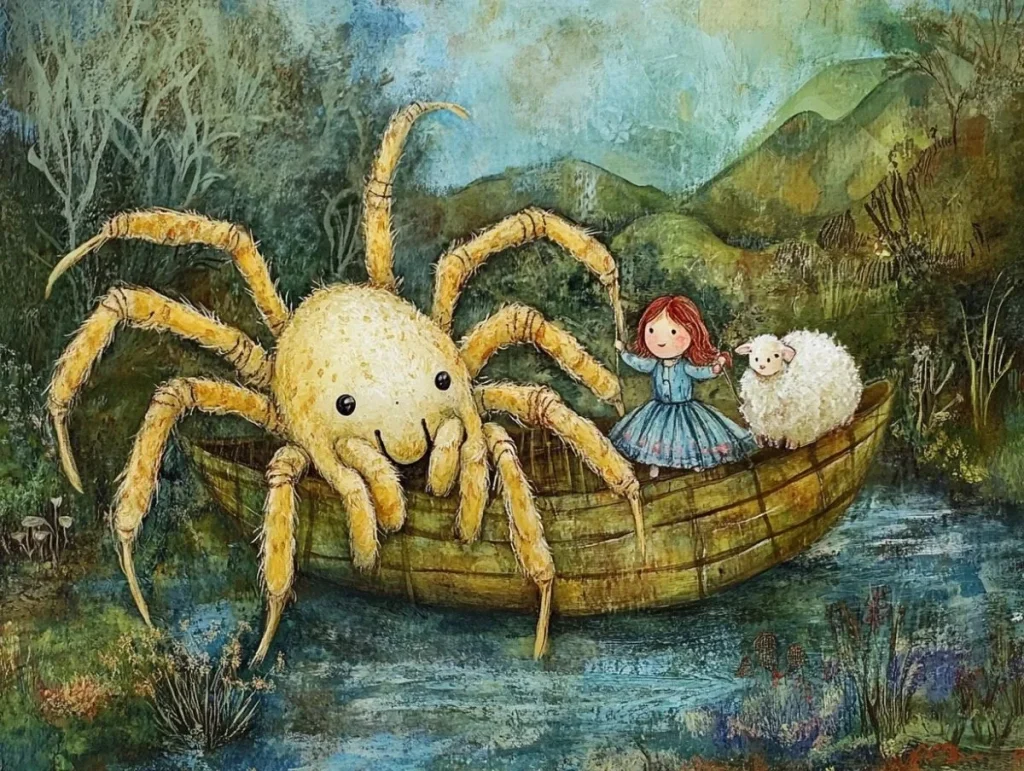
I have sung “Hush, Little Baby” to a room of three-year-olds and to a single wide-awake toddler at 11 p.m., and I can report that the song does not care how good your voice is. It works because of the pattern: one promise, one problem, another promise. Kids lean into that rhythm the way they lean into a story they already know.
If you came here for the words, they are below, in full. If you came because the song is stuck in your head and you want to know why a 19th-century American folk tune about a mockingbird and a billy goat still puts babies to sleep, that is here too, along with five ways to actually use it.
Hush, Little Baby: The Full Lyrics
There is no single official version. Like most folk songs, it traveled by ear, so verses vary by family and by region. Here is the version most people know, with the traditional verses in order:
Hush, little baby, don’t say a word, Mama’s gonna buy you a mockingbird. And if that mockingbird won’t sing, Mama’s gonna buy you a diamond ring. And if that diamond ring turns brass, Mama’s gonna buy you a looking glass. And if that looking glass gets broke, Mama’s gonna buy you a billy goat. And if that billy goat won’t pull, Mama’s gonna buy you a cart and bull. And if that cart and bull turn over, Mama’s gonna buy you a dog named Rover. And if that dog named Rover won’t bark, Mama’s gonna buy you a horse and cart. And if that horse and cart fall down, You’ll still be the sweetest little baby in town.
Notice what the last line does. After nine promises and nine things going wrong, the song stops buying and just says: you are still the sweetest baby in town. That is the whole emotional engine of the lullaby in one line, and it is why the ending lands even when the middle is silly.
Where Does “Hush, Little Baby” Come From?
The exact origin is unknown, which is normal for folk songs. It is generally dated to 19th-century America, most likely the rural South, where it was passed down orally rather than written. The first widely circulated printed versions appear in early 20th-century American song collections, which is when folklorists started writing down what families had been singing for generations.
The song also has a habit of turning up in unexpected places. It appears in the soundtrack of Lady Bird and in older films and television, usually at a moment when a character needs to be soothed rather than entertained. That is a decent clue to what the song is for: it is a comfort object with a melody.
Why the Promises Are So Strange
A mockingbird, a diamond ring, a looking glass, a billy goat, a cart and bull, a dog named Rover, a horse and cart. It reads like a shopping list written by a very hopeful parent with no budget. That is part of the charm. Each item is concrete and picturable, which is exactly what makes it useful for language learning, and each one fails in a mildly funny way, which keeps a fussy baby listening instead of crying.
What “Hush, Little Baby” Teaches (Without Trying)
1. Emotional Comfort
The gentle melody and repetitive promises create a sense of security, helping children feel loved and protected. The final line, where the baby is praised rather than bought, does most of that work.
2. Language Development
The song is a rhyme chain: word, mockingbird, ring, brass, glass, broke, goat, pull, bull, over, Rover, bark, cart, down, town. Every verse sets up the next sound. For a child learning English, that is pronunciation practice disguised as bedtime, and the concrete nouns (ring, glass, goat, dog, horse) are easy to point at, draw, or act out.
3. Cultural Connection
Learning and singing traditional lullabies connects children to a shared cultural heritage. It is also a nice bridge for bilingual families: sing the English verse, then improvise the same promise in the home language and let the child hear both.
4. Imagination and Creativity
The fantastical promises inspire children to think creatively and imagine new scenarios. Ask a four-year-old what Mama should buy next and you will get answers no songwriter would have thought of.
5 Ways to Sing and Play “Hush, Little Baby”
1. Personalize the Promises
Replace the traditional items with modern or personal ones. For example, “Mama’s gonna buy you a teddy bear” or “Papa’s gonna buy you a shiny car.” The pattern survives the swap, and the child hears their own world in the song.
2. Incorporate Props
Use small toys or household items to act out the lyrics, making the song interactive and engaging. A plastic ring, a mirror, a toy dog, and a cardboard cart cover almost the whole song, and a toddler will hand them to you in the right order once they know it.
3. Build a Calming Bedtime Routine
Pair the song with a gentle rocking motion or cuddling to create a calming bedtime ritual. Sing it at the same point every night, after the last story and before lights out, and it becomes a cue rather than a performance. Slower each verse, quieter each verse, done.
4. Draw the Promises
Encourage older children to draw or color pictures of the items mentioned in the song, fostering creativity and comprehension. Nine items make a nine-square grid, which is a nice quiet after-dinner activity and doubles as a sequencing exercise: can they put the pictures in the order the song sings them?
5. Use It for Vocabulary in a Second Language
Because the nouns are concrete, this song translates easily. Sing the English verse, then sing your version of the same promise in Spanish, French, or whichever language is in your house, and let the child point at the object. If you want more song-based language practice, my post on teaching kids English and Spanish through songs has a fuller routine you can borrow.
Why Kids Love It
Children are naturally comforted by the repetitive structure and soothing melody of “Hush, Little Baby.” The imaginative promises spark their curiosity, while the song’s tone reassures them of their parents’ love and care. The predictability is the point: a baby who cannot follow the words can still follow the shape.
A Quick Note for Parents Who Don’t Sing
You do not need to sing well. You need to sing slowly and at the same time each night. If your voice genuinely makes you cringe, hum the melody and say the words in a low, steady voice, almost like a chant. Babies respond to the rhythm and the familiar voice, not the pitch. (I have tested this on a very honest four-year-old, who told me my high notes sounded like a sad cat. She still fell asleep.)
Conclusion
“Hush, Little Baby” is more than just a lullaby; it’s a timeless expression of parental love and comfort. Whether sung at bedtime or during moments of distress, this classic tune continues to bring peace and connection to families around the world. Pick one of the five ideas above, try it tonight, and see which verse your child asks for again.