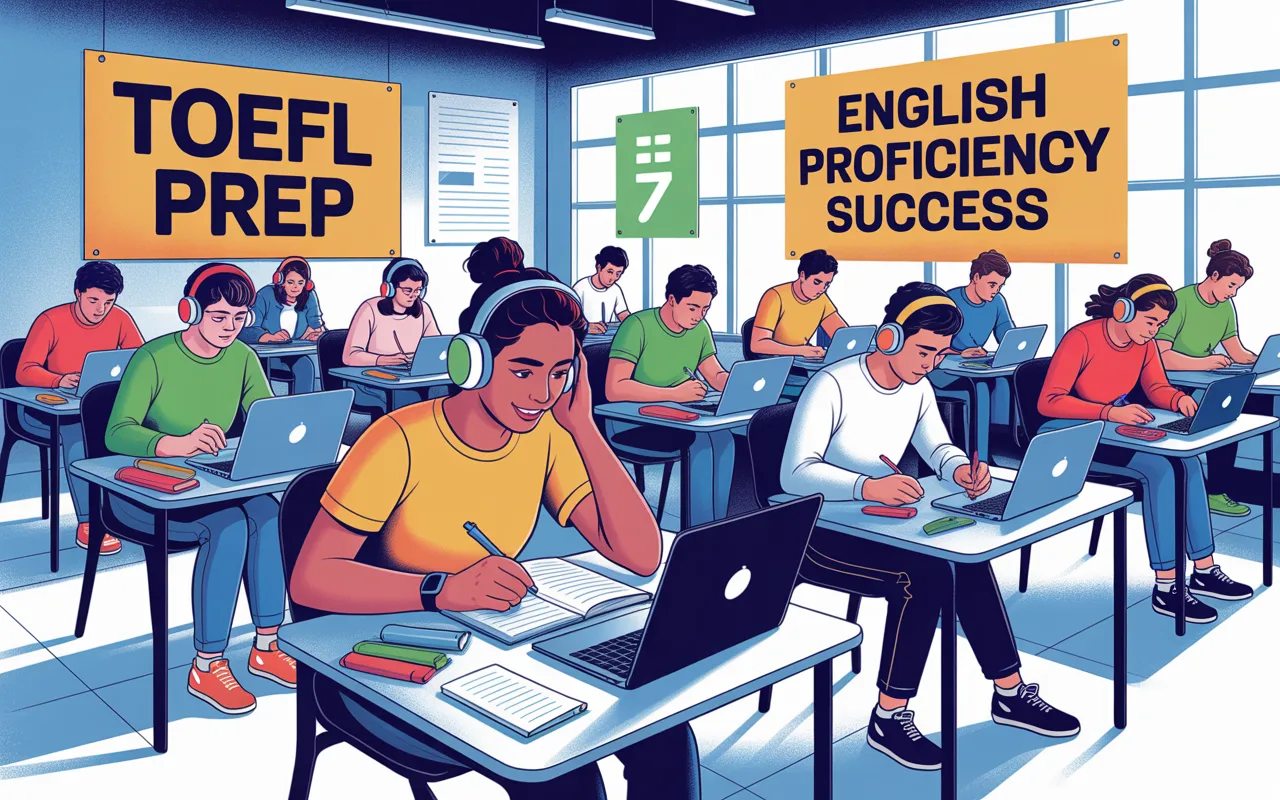
TOEFL Explained for English Learners: What It Is, Why It Matters, and How to Prepare Without Falling Apart
If the word TOEFL has been floating around your life like a tiny cloud of academic stress, welcome. You are not overreacting. The TOEFL matters for a lot of students. It can shape university applications, scholarships, and study-abroad plans. But it is also just a test. A very specific, very learnable test.
And once you understand what it is actually asking from you, the whole thing becomes less mysterious and a lot more manageable.
What TOEFL actually means
TOEFL stands for Test of English as a Foreign Language. In normal human language, that means it measures whether you can handle English in an academic setting: reading course material, understanding lectures, responding to prompts, and writing clearly under pressure.
That is why the TOEFL feels different from casual English apps or school worksheets. It is not testing whether you can order coffee or make polite small talk. It is testing whether you can survive classrooms, assignments, and university-style communication in English.
Why students take the TOEFL
Most students take the TOEFL because a school, university, scholarship, or international program wants proof of academic English ability. And this is the first boring but important rule: always check the requirements for your specific school first. Not every institution wants the same score. Not every program accepts the same format. One school may be fine with your current level while another wants something much higher.
Do not build your whole prep plan around vague internet panic. Build it around the score you actually need.
What is on the TOEFL?
The TOEFL iBT focuses on four skills:
Reading — academic passages, main ideas, structure, vocabulary in context
Listening — lectures and conversations with note-taking pressure built in
Speaking — spoken responses to prompts, sometimes based on reading and listening
Writing — typed responses that require structure, clarity, and control
That sounds like a lot because it is a lot. But it is also patterned. TOEFL questions are not random. The test rewards familiarity, structure, and repeated practice much more than dramatic talent.
Why the TOEFL feels hard
The hardest part is usually not English by itself. It is English plus timing plus pressure plus academic style. A student can be perfectly functional in daily English and still feel crushed by the TOEFL because the test asks them to process information quickly, organize ideas fast, and perform under a clock.
Which, frankly, is rude. But at least it is predictable.
The four skills that matter most
Reading
TOEFL reading is not about lovingly appreciating every sentence like it is sacred literature. It is about spotting structure fast. What is the main idea? What is supporting evidence? Where is the contrast? What is the author actually doing with the paragraph?
Listening
Listening is where many students start bargaining with the universe. The best fix is exposure plus note-taking practice. Train yourself to hear structure, not just vocabulary. Listen for examples, conclusions, attitude shifts, and contrasts.
Speaking
This part makes strong students panic because talking into a microphone with a timer running is not how normal people enjoy communicating. But the goal is not brilliance. The goal is clarity. A clear, organized answer beats a fancy, wandering answer every time.
Writing
TOEFL writing does not want poetry. It wants structure. Clean organization, relevant support, and readable academic English matter much more than trying to sound impressive.
A prep plan that actually works
There are a million fake promises online about getting a huge TOEFL score in three magical days. Ignore them. The real plan is less sexy but much more effective:
Start with official TOEFL resources so you understand the real format.
Figure out your weakest skill instead of pretending all four are equal.
Practice consistently instead of cramming once a week in a panic.
Review your mistakes so you stop repeating the same problems.
Build simple speaking and writing structures you can trust under pressure.
If vocabulary is your weak spot, spend time with focused word lists and recurring academic language, not random giant lists that turn into wallpaper in your brain. If you need more support there, the site now also has a growing vocabulary section and a broader set of language-learning resources.
Common mistakes students make
Mistake one: thinking they need perfect English. You do not. You need controlled, test-ready English.
Mistake two: doing endless practice tests without analysis. Practice helps, but improvement comes from understanding what keeps going wrong.
Mistake three: studying vocabulary with no context. TOEFL words make more sense when you learn them in themes, readings, and real academic situations.
Mistake four: treating one bad score like a prophecy. Early practice scores are often messy. That is normal, not destiny.
Where to focus first
If you are just starting, here is the sane order:
learn the test format
take one realistic practice baseline
identify your weakest section
build a steady routine around reading, listening, speaking, and writing
use targeted vocab and study support instead of random panic-studying
If you are helping a younger learner or working across ESL support more broadly, browse the site’s study resources and education guides too. The best prep happens when test prep is connected to real language growth, not isolated from it.
Final reminder
The TOEFL is important. It is not your whole story. It measures a specific kind of academic performance on a specific day. You can train for that. You can improve at that. And you do not need to become some flawless English robot to do well.
You just need to understand the game, practice with intention, and stop letting the word TOEFL sound scarier than it actually is.