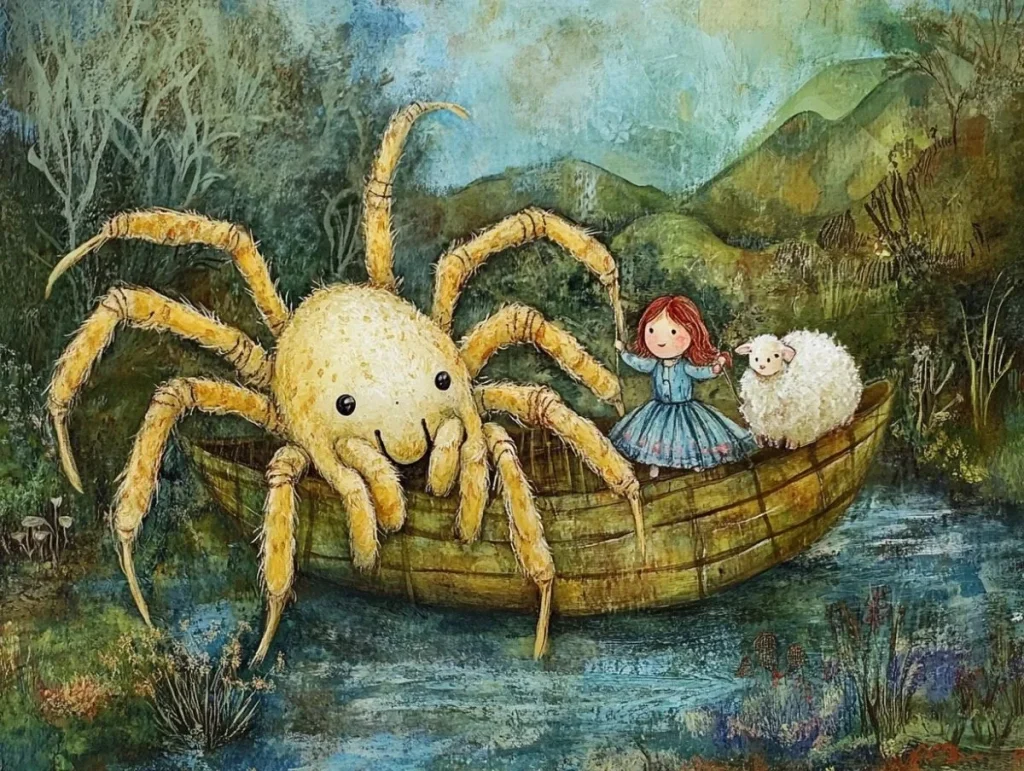
Some songs earn their place in the car. “Old MacDonald Had a Farm” is one of the few I can sing on autopilot while a toddler in the back seat decides whether today is a cow day or a duck day. The tune is simple, the words repeat, and the animal sounds give a child something to do besides listen. That combination is why it has survived for over a century and why it still works in a classroom of three-year-olds.
Here is the full lyric, the actual history behind it, and five games that turn the song into a short language and listening activity you can run without buying anything.
Old MacDonald Had a Farm Lyrics (Full Verse)
Here is one complete verse, using the cow:
Old MacDonald had a farm, E-I-E-I-O, And on that farm he had a cow, E-I-E-I-O, With a moo moo here, And a moo moo there, Here a moo, there a moo, Everywhere a moo moo, Old MacDonald had a farm, E-I-E-I-O.
The rest of the song is the same verse with a new animal swapped in, which is exactly why it is so easy to extend. A quick animal and sound list for the next verses:
Animal
Sound in the song
Spanish
Cow
moo
vaca / muuu
Pig
oink
cerdo / oinc
Duck
quack
pato / cuac
Sheep
baa
oveja / beee
Horse
neigh
caballo / iiih
Chicken
cluck
gallina / clo clo
If you are raising a bilingual child, singing the same verse in Spanish is a low-effort way to add vocabulary. The songs-first approach works because the melody does the memorizing for you.
The Real History: It Started as “Old Macdougal”
The song most of us know was not always about MacDonald. An early printed version, titled “Old Macdougal Had a Farm,” appeared in American songbooks in the early 1900s, and folklorists trace similar verses back to British and Irish farm songs. The melody itself is older than any single printed copy, which is why you will find small variations in the tune depending on where you grew up.
The detail I like most: the “E-I-E-I-O” is not a word in any language. It is a nonsense chorus, and nonsense choruses are one of the reasons young children latch onto a song so fast. A syllable pattern a child can predict is a syllable pattern a child can join in on, even before they can sing the rest of the line.
What the Song Actually Teaches
It is a nursery rhyme, not a curriculum. Still, four real skills get practiced every time a child sings it:
Animal vocabulary and sounds. A child connects an animal name to the noise it makes, which is one of the earliest ways children categorize the world.
Language and memory. The repeated phrase “here a…, there a…, everywhere a…” builds a predictable sentence frame. That frame is a stepping stone to longer sentences.
Rhythm and pitch. The short, bouncy melody gives children practice matching a beat and a tune, which supports early reading and listening skills.
Imagination. Once a child knows the pattern, they can invent verses about a dinosaur, a robot, or the family dog.
None of this requires a screen or a worksheet. The song is the activity.
5 Old MacDonald Games for Ages 2-6
1. Guess the Next Animal
Sing the first two lines, then pause before the animal name and hum instead. Ask the child to guess. This is active listening disguised as a game, and it works just as well with a shy child because the answer is one word.
Adaptation: For a child who is still learning to talk, point to a picture of the animal instead of saying the word.
2. Stuffed Animal Farm
Put five or six stuffed animals or toy figures in a pile. As you sing each verse, the child holds up the right animal and makes its sound. The physical action keeps hands busy and gives a wiggly child a job.
3. Paper Farm Craft
Draw a barn and a fence on a big sheet of paper, then let the child add animal cutouts as you sing about each one. This turns the song into a slow, calm activity for the end of the day. It also gives you a finished picture to hang up and sing to later.
4. Turn It Into a Story
After the song, ask a simple question: “What did the cow do after breakfast?” Let the child invent the answer. This is where the song quietly becomes a storytelling exercise, and the same skill shows up in creative writing prompts for older kids once they can hold a pencil.
5. Real Farm Visit
If a local farm or petting zoo is nearby, go sing the song there. Hearing a real cow after singing about one connects the word to the world, and the memory tends to stick. One classroom trip was enough to make my class ask for the song every morning for a month.
Why Kids Love It
The song is short, the pattern is predictable, and the animal sounds are funny to make. Children like a song they can predict and a job they can do, and “Old MacDonald” gives them both. The customizable verses also mean the child gets a say, which is why a preschooler will happily add a llama or a dragon to the farm and sing about it for the rest of the afternoon.
If you want more rhymes in the same vein, the classic nursery rhyme collection covers Twinkle Twinkle and Baa Baa Black Sheep with the same activity ideas.
Conclusion
“Old MacDonald Had a Farm” is more than a nursery rhyme. It is a small, portable learning tool that works in the car, in the kitchen, or on a real farm. Start with the verse above, add one new animal, and let the child decide what comes next. Watching a quiet kid suddenly request a dinosaur verse never gets old.