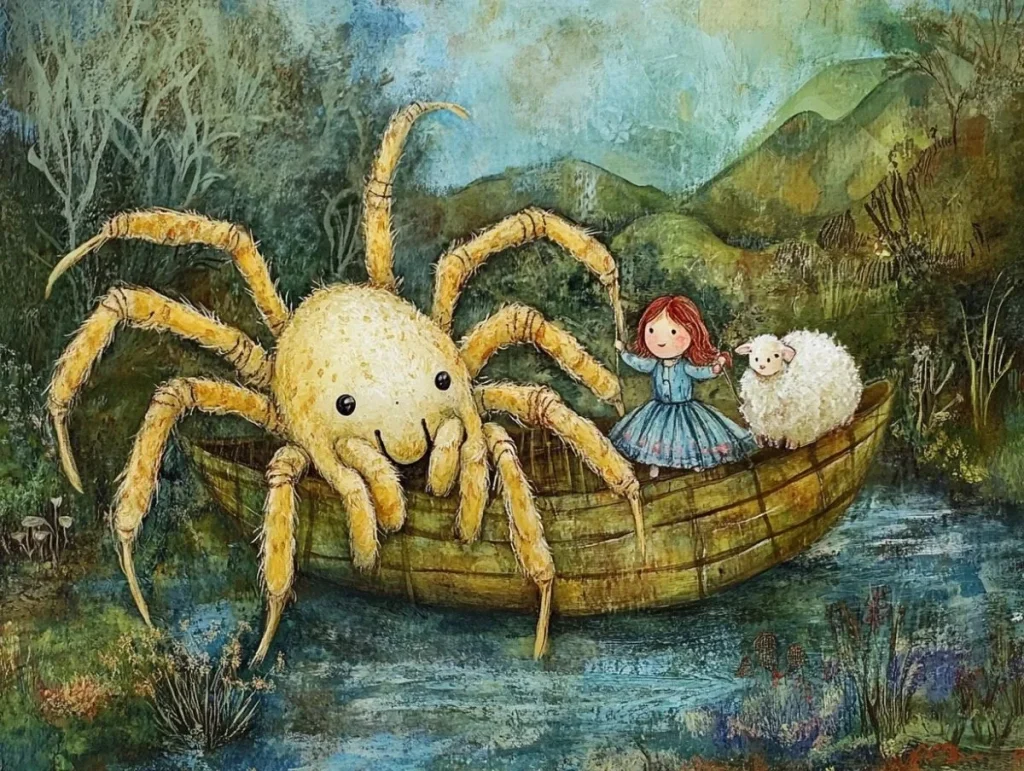
I have sung “The Itsy Bitsy Spider” approximately four hundred times, and I still do the hand motions slightly wrong. (A five-year-old corrected me last spring, with great patience.) That is the thing about this rhyme: it looks like a two-minute filler song, and then you notice a toddler doing the climbing fingers on her own, whispering the words, and you realize something stuck.
Here is the full picture: the words, the motions, the real history (it is older than most people think), and four activities that turn the song into actual learning without anyone noticing they are learning.
The Itsy Bitsy Spider Lyrics (Full Words)
Here is the most commonly sung version:
The itsy bitsy spider climbed up the waterspout. Down came the rain and washed the spider out. Out came the sun and dried up all the rain, And the itsy bitsy spider climbed up the spout again.
That is the whole song. One verse, four lines, a loop. The cyclical structure is why children remember it so fast: by the second time through, they are already predicting the next line.
A quick note for bilingual households and ESL teachers: because the verse repeats, it is a good candidate for a second language. The rhyme about the spider also appears in other languages with its own hand motions, so a child who knows it in English has a head start on the same song in Spanish or French. If you want more songs to build on, this collection of Spanish nursery rhymes for beginners pairs well with it.
The Real History: Older Than You Think
The exact origins are unknown, but the song probably grew out of a traditional folk tune in the early 20th century. Its first known publication appeared in the 1910s under the title “The Spider Song.” Over the decades it picked up regional names, most famously “Incy Wincy Spider” in the United Kingdom and Australia.
The part that surprises most parents: it is not a modern children’s song written to sell a toy or a TV show. It arrived through the same oral tradition as “Mary Had a Little Lamb” and “Twinkle, Twinkle, Little Star,” which is why you will find slight variations in wording depending on which grandmother sang it.
The rhyme’s staying power comes down to its small, sturdy story: a creature tries, fails, waits out a setback, and tries again. Nobody lectures the child about resilience. The song just does it in four lines.
The Hand Motions, Step by Step
These are the classic motions. Do them slowly the first few times so children can watch your hands, then speed up once they join in.
“The itsy bitsy spider climbed up the waterspout” — touch your thumbs together and wiggle your fingers upward like a climbing spider.
“Down came the rain” — wiggle your fingers downward in front of you, like raindrops falling.
“And washed the spider out” — sweep both hands out to the sides.
“Out came the sun” — make a big circle with your arms overhead.
“And dried up all the rain” — hold the circle and sway gently.
“And the itsy bitsy spider climbed up the spout again” — return to the climbing fingers.
If a child struggles with the climbing fingers, try it with just the index fingers first, then add the rest of the hand once the idea clicks. The motions are the part that makes the song stick, so let them be messy.
What the Song Actually Teaches
Fine Motor Skills
The climbing fingers, the rain wiggle, and the sun circle all ask small hands to isolate and coordinate movements. That is the same dexterity children need later for holding a pencil and forming letters.
Language and Early Literacy
The rhyme repeats sounds (itsy bitsy, spout, out) and uses a simple rhythm that supports phonemic awareness. Children who can hear the rhyme in “spout” and “out” are practicing the sound-matching that later helps with reading.
Resilience (Without the Lecture)
The spider gets washed out, then climbs again. That is the whole emotional arc of the song, and children absorb it without being told to. It gives them a small story to borrow the next time something goes wrong.
Imagination and Storytelling
The spider and the weather are vivid enough to build on. Ask a child what the spider was doing up there, where the water went, or what happened after the sun came out, and you have a story starter.
4 Activities to Pair With the Song
1. Act Out the Weather
Sing the song once with motions, then sing it again with a child playing the rain and the sun. A scarf waved overhead becomes rain; arms in a circle become the sun. The physical version helps children map words to actions, which is especially useful for language learners.
2. Craft a Spider and a Waterspout
Pipe cleaners and googly eyes make a spider in about three minutes. A paper towel roll becomes the waterspout. The craft gives children something to hold while they sing, and the spider can climb the spout for real.
3. Talk About Where Rain Goes
The song contains a small science lesson: rain falls, the sun dries it up. That is the water cycle in miniature. Ask where the water comes from and where it goes after the sun comes out. One good question is enough; children fill in the rest.
4. Make a New Verse
Older kids can invent a second verse: the spider climbs a tree, or the rain comes back, or a bird shows up. The pattern makes it easy to slot in new words. This is a low-pressure way to practice rhyming and story structure without anyone announcing it is a writing exercise.
Why Kids Keep Coming Back to It
Children are drawn to the melody and the motions, but the real hook is the loop. The song ends where it started, and children find that satisfying in the same way they like a story read twice. The spider’s persistence also mirrors their own experience of trying again after a small failure, which makes the song feel like it is about them.
If your child likes this kind of repetition, nursery rhymes are a good gateway to more. The site’s collection of nursery rhymes kids love bundles it with two other classics, and if you want to use songs for language learning, this guide on teaching kids English and Spanish through songs picks up where the sing-along leaves off.
A Small Thing to Try Tonight
Sing it once with the motions, slowly, and let your child correct you. A five-year-old will. Then ask what the spider did after the sun came out. Whatever answer you get is the start of the next verse.